


About IMaSS
Greetings
The Institute of Materials and Systems for Sustainability (IMaSS) celebrated its 10th anniversary in October 2025. Since its establishment, it has been designated by the Ministry of Education, Culture, Sports, Science and Technology (MEXT) as a joint usage/research center of environment-friendly and sustainable energy -saving and energy-creating materials and systems research. It has engaged in numerous joint usage and collaborative research projects with domestic and overseas universities and research institutes.
IMaSS consists of the Center for Integrated Research of Future Electronics (CIRFE), the Advanced Measurement Technology Center (AMTC), the Division of Materials Research (DM), the Division of Systems Research (DS), three facilities, two funded research divisions, and 10 industry–academia collaborative chairs. A key distinguishing feature from other departments is its promotion of comprehensive research spanning from “basic research” on elemental technologies such as advanced materials and devices to “applied research” on system technologies aimed at social implementation.
CIRFE integrates leading-edge electronics research using devices and systems based on next-generation post-silicon materials. It also cultivates top-notch human resources and accumulates research results on world-leading energy-saving and energy-creating materials, devices, and systems. Notably, the CIRFETransformative Electronics Facilities (C-TEFs) featuring a large-scale cleanroom were established in 2018 as the world’s only research center specializing in nitride semiconductor devices. These facilities have been utilized to conduct major research projects funded by MEXT and the Ministry of the Environment, generating outstanding research outcomes.
AMTC, centered on its High-Voltage Electron Microscope Laboratory and Research Facility for Advanced Science and Technology, promotes the development of advanced measurement technologies and the cultivation of human resources. Furthermore, by participating in MEXT’s Advanced Research Infrastructure for Materials and Nanotechnology in Japan (ARIM) and various activities as a joint usage/research facility, AMTC carries out numerous collaborative research projects with domestic and overseas research institutes.
DM engages in research on novel materials and advanced nanomaterials useful for future energy systems and energy-saving devices. It also participates in the collaborative project among six research institutes supported by MEXT, conducting collaborative research with the six institutes of other universities.
DS promotes advanced technologies for energy conversion, transport, and utilization, while also advancing the development of environmental impact assessment methods, traffic management technologies, and information security technologies.
Over the next 10 to 20 years, society is expected to undergo significant changes driven by global climate change, the transition to a decarbonized and sound material-cycle society, the advancement of digital society, and the proliferation of AI. Amidst these changes, IMaSS will serve both as an academic research center for knowledge creation and an industry–academia collaboration center for solving societal challenges. Building upon the research foundation established thus far and moving forward to a new stage of development with an eye toward the next era, all members of IMaSS will dedicate
themselves fully to their respective research projects. We sincerely request your continued support and cooperation for such future-oriented IMaSS 2.0.
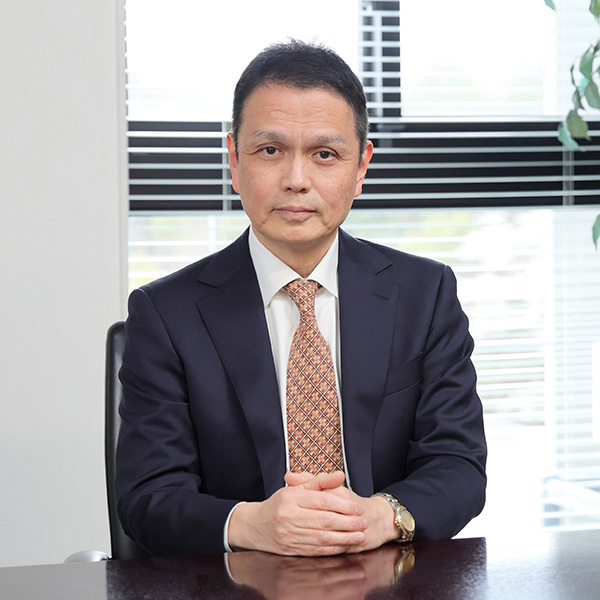
Director
UCHIYAMA, Tomomi
Tomomi Uchiyama is currently the director of the Institute of Materials and Systems for Sustainability (IMaSS) at Nagoya University. He received a DC degree from Nagoya University, Japan, in 1987. After serving as a research associate and an associate professor at Nagoya University, he was promoted to a professor of the EcoTopia Science Institute at Nagoya University in 2009, then became a professor of IMaSS in 2015.
His research interests include computational fluid dynamics and fluid engineering, with special emphasis on investigating the elucidation, control, and industrial application of multi-phase flows in which more than one phase (i.e., solid, gas, or liquid) occurs. He is also devoted to the development and social implementation of IoT sensors and micro-hydraulic turbines that effectively utilize hydraulic energy.
 IMaSS Movie

Vice Director
YAMAMOTO, Toshiyuki
Toshiyuki Yamamoto is currently the vice-director of the Institute of Materials and Systems for Sustainability (IMaSS) at Nagoya University. He received a doctoral degree from Kyoto University,Japan, in 2000. After serving as Research Associate at Kyoto University, he joined Nagoya University in 2001 as Associate Professor of Graduate School of Engineering. He was promoted to Professor of the EcoTopia Science Institute in 2010, then became Professor of IMaSS according to the reorganization of the institute in 2015. He became the vice-director of IMaSS in 2022.
His research interests include car ownership and usage such as autonomous driving, electric vehicle, and car sharing, and traffic safety analysis by accident statistics data mining, experimental methods, and traffic simulations. Recently, he has started the disaster prevention such as humanitarian logistics for Nankai Trough Earthquake, and research on hydrogen society such as hydrogen fuel cell vehicle ownership and safety issues of hydrogen stations.
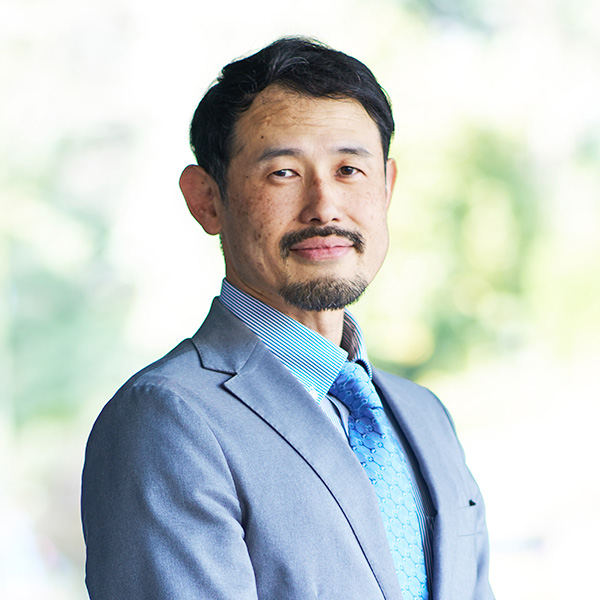
Vice Director
OHNO, Yutaka
Yutaka Ohno is currently serving as the Vice-Director of the Institute of Materials and Systems for Sustainability (IMaSS) at Nagoya University. He obtained his doctoral degree from Nagoya University in 2000. He started his career as an Assistant Professor in the Department of Quantum Engineering at Nagoya University in 2000 and was promoted to Associate Professor in 2008. In 2015, he was appointed as a Professor at the EcoTopia Science Institute, and later transitioned to become a Professor at IMaSS following the institute's reorganization in the same year. In 2024, he assumed the role of Vice-Director at IMaSS.
His research focuses on nanomaterials and their applications in future semiconductor electronics. Specifically, he explores device physics, characterization methods, and integration technologies for flexible electronics using semiconductor carbon nanotubes and two-dimensional materials.
History
| 2004 |
|
|---|---|
| 2005 |
|
| 2006 |
|
| 2007 |
|
| 2008 |
|
| 2009 |
|
| 2010 |
|
| 2011 |
|
| 2013 |
|
| 2014 |
|
| 2015 |
|
| 2016 |
|
| 2017 |
|
| 2018 |
|
| 2019 |
|
| 2020 |
|
| 2021 |
|
| 2022 |
|
| 2023 |
|
| 2024 |
|
| 2025 |
|

